What Small Business Owners Get Wrong About Compliance (And How to Get It Right)
Most small businesses ignore compliance until it bites them. Here’s what to actually care about, what tools to use, and when to call a lawyer.


Published under The Legal Hat on HatStacked.com
Most small business owners don’t wake up and think, “I hope I read some really exciting legal documentation today.” And that’s exactly why compliance sneaks up on you like a tax form in a junk drawer. Here’s what to actually pay attention to and how to keep your business out of legal hot water without turning into a walking rulebook.
Let’s Get One Thing Straight: Compliance ≠ Boring (When You Own the Business)
You’re probably thinking:
- “I’m just a small operation, this stuff doesn’t apply to me.”
- “I’ll worry about it when I have employees.”
- “My cousin’s friend said it’s fine.”
Bad news: it applies to you.
Good news: most of it is avoidable chaos, not unavoidable doom.
What Even Is Compliance, Really?
Compliance just means following the rules: federal, state, local, industry-specific, and sometimes downright weird.
For small businesses, this includes:
- Business licenses
- Tax registrations and filings
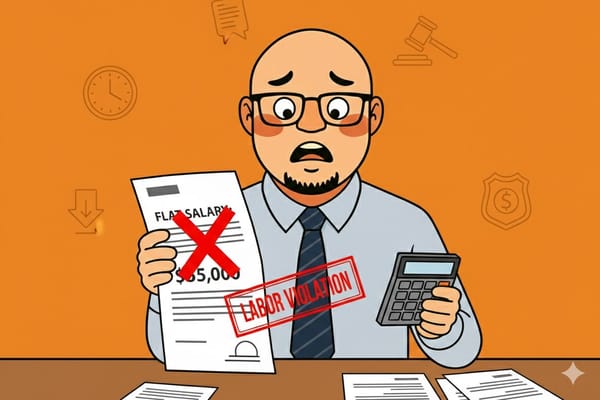
- Labor and employment rules
- Data privacy regulations
- Safety and zoning laws
- ADA accessibility
- And... whatever new thing your state invents next year
It’s not about being paranoid. It’s about avoiding fees, lawsuits, audits, and paperwork avalanches you can’t unstack.
The Most Common Compliance Mistakes (We’ve Made a Few)
1. No Written Employee Agreements
Verbal agreements are great until they’re not. If you hire someone, you need:
- A job description
- Compensation terms
- A confidentiality clause
- A clear at-will employment statement (unless you’re in Montana)
Even if it’s just your cousin running the register three days a week.
Related: The HR Hat: When an Employee Quits But Still Files for Unemployment
2. Ignoring Local Licensing Requirements
States and counties all love to surprise you with new rules.
You might need:
- A reseller’s certificate
- A DBA registration
- A home occupation permit
- A commercial kitchen license (if you're brewing up goods)
Call your city clerk. Yes, the literal clerk. They're weirdly helpful.
3. Forgetting About Data Privacy Laws
You may think this only applies to big companies, but even collecting emails can require:
- A clear privacy policy
- GDPR compliance (yes, even if you don’t live in Europe)
- Opt-in language that doesn’t sound like a trick
4. Treating Contractors Like Employees
Quick quiz: if they…
- Use your tools
- Work your schedule
- Represent your company externally
- Can’t work for others while on your clock
They’re probably an employee.
Misclassification gets expensive fast. Don’t assume 1099 status means “less paperwork.”
5. Skipping the Employee Handbook
Even if you only have one employee, a simple handbook saves your life during disputes. It sets expectations for:
- Time off
- Dress code (if any)
- Communication
- Workplace safety
- What happens if someone microwaves salmon in the break room
No need to write a novella. Just make it clear.
Tools That Make Compliance Suck Less
You're busy. Use tools:
- Gusto or Justworks for payroll + compliance
- Bizee for LLC and registered agent services
- Iubenda for data privacy and legal documents
- Clerky if you’re raising capital or issuing equity
None of these are magic bullets, but they help you not forget the bullets exist.
Real Talk: When to Call a Lawyer
You don’t need to hire a full-time attorney. But if you're:
- Starting a partnership
- Creating complex employment agreements
- Licensing a product
- Dealing with intellectual property
- Being sued (hey, it happens)
…you want actual legal guidance, not Reddit advice.
Tip: look for small-business legal clinics at local universities or nonprofits. You can get real help without mortgaging your dog.
The Hidden Cost of Getting It Wrong
Non-compliance doesn’t always show up as a lawsuit. Sometimes, it’s:
- A tax fine you didn’t see coming
- A permit that delays your launch
- A contract clause that burns you later
- A negative employee review that sparks an audit
- A government agency you didn’t know existed calling you on a Thursday
Don’t learn the hard way. Trust us. That Thursday phone call is never fun.
Make a Compliance Calendar (It’s Not Just for Nerds)
Once a year, schedule an hour to check:
- Licenses and renewals
- Payroll and wage laws
- State and local filings
- Insurance coverage
- Changes in labor or privacy law
Put it on your actual calendar. Color code it if you’re feeling fancy.
Final Word
Compliance isn’t exciting. But it’s the stuff that lets you keep your business.
And it doesn’t have to be overwhelming. If you treat it like brushing your teeth instead of ignoring it until it becomes a root canal, you’ll stay ahead of most small business owners.
Be the boring, responsible founder your future self will thank.