The Flop Hat: The Time I Let AI Write Our Product Descriptions (And It Got Weird)
I thought AI could handle our product descriptions. It couldn't. Here's what went wrong, what I learned, and how to avoid selling emotionally intelligent scales.


Published under The Flop Hat on HatStacked.com
I was tired. We had 150 new products to list. The idea of writing unique, engaging descriptions made my brain wilt. Then AI whispered, “I can help.” And for a moment, I believed it.
Let me set the scene.
It was launch week for a new product line. The kind of week where you survive on caffeine and lightly panicked breathing. Between supply chain chaos, pricing spreadsheets, and website updates, I decided to get clever.
I told myself, “You know what would save hours? Letting AI write all the product descriptions.”
What could possibly go wrong?
The First Red Flag: The Descriptions Were Too Polite
One of the first drafts read:
“Experience a delightful interaction with our premium widget, crafted for users who value both form and functionality.”
I sell industrial parts.
This sounded like something you'd say before offering someone a scone. It was polished. It was grammatically correct. It had absolutely no idea what the product was or who it was for.
The Second Red Flag: Repetition. So Much Repetition.
Here’s a real excerpt from three different descriptions:
- “Ideal for daily use in any professional setting”
- “Perfect for daily use across multiple industries”
- “A reliable daily-use solution for professionals”
Apparently, our target market was people who used things... daily. Groundbreaking.
AI didn’t know the difference between a load cell and a shipping scale, but it sure knew how to copy and paste enthusiasm into a thesaurus.
The Worst Offense: It Lied
We sell a basic pocket scale.
The AI described it as:
“Expertly engineered with aerospace-grade polymers for maximum durability under extreme pressure.”
It’s a twenty-five-dollar scale. It weighs things.
It is not rated for reentry into the Earth’s atmosphere.
Had I published it, a customer might have expected to weld it to a rocket engine.
Where It All Went Off the Rails
After generating about 30 descriptions, I stopped reading them closely. I trusted the AI. That was my mistake.
Within 24 hours of publishing:
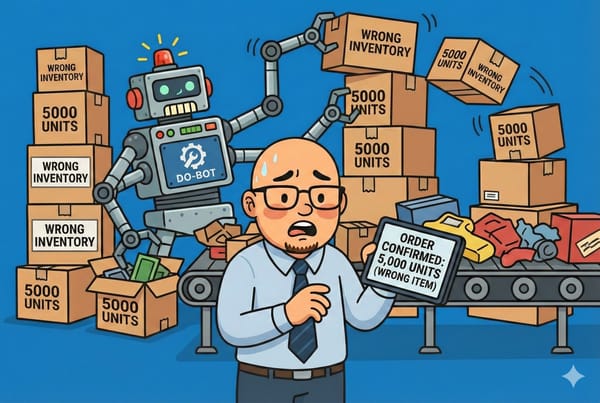
- One product listed a feature it didn’t have
- Another claimed it was waterproof (it wasn’t)
- A customer called to ask what “ergonomic texture refinement” meant
- And someone asked if we really sold "tactile, emotionally intelligent hardware"
We absolutely did not.
The Fire Drill
I had to pull half the products off the site, rewrite the descriptions manually, and send two apologetic emails to confused customers who thought they were buying smart tech.
One vendor even called to ask if we had started "selling poetry."
Not ideal.
What I Learned (The Hard Way)
1. AI Is a Tool, Not a Writer
It’s great for rough drafts, bullet points, or turning notes into something readable. But if you copy-paste the output without review, you’re one line away from selling sentient cardboard.
2. Accuracy Matters More Than Style
A charming lie is still a lie.
Misleading product claims can hurt your credibility and even trigger legal issues.
Related: How to Write a Product Description That Doesn’t Sound Like AI Wrote It
3. Customers Can Smell Robots
Even if you think the copy sounds fine, readers can spot filler language from a mile away. Especially if it’s eerily formal or full of buzzwords.
People want clarity, not corporate fluff.
Will I Use AI Again?
Absolutely. But now it works with me, not instead of me.
I draft, then edit.
I feed it accurate inputs, then double-check every output.
I keep the voice human, the facts real, and the metaphors minimal.
(Also, I now delete anything that mentions "synergy.")
Bottom Line
Letting AI handle your product descriptions isn’t always a disaster. But if you treat it like a set-it-and-forget-it content machine, you’re eventually going to sell a scale described as “space-age emotional hardware.”
Learn from my flop. Use the tool. Just don’t let it drive.