The Flop Hat: The ERP That Broke Our Business (Temporarily)
We tried to modernize our operations with an ERP. Instead, we nearly broke the whole business. Here’s what happened and what we learned.


Published under The Flop Hat on HatStacked.com
There comes a time in every growing business when someone says, "We need an ERP."
That person might be ambitious. They might be right. They also might be about to trigger the most chaotic year of your company’s life. Ask us how we know.
When the Spreadsheet Era Ends
We had outgrown our patchwork system of spreadsheets, shared drives, manual workarounds, and late-night inventory reconciliations. It was time for something real.
Enter the ERP.
Enterprise Resource Planning software.
The thing that was supposed to unify everything: orders, inventory, purchasing, reporting, all in one magical dashboard.
We were sold. We were excited.
We picked a provider that promised easy onboarding, powerful customization, and a dedicated success team.
Let’s call them the Company that Shall Not Be Named.
Warning Sign #1: If It Takes Four Months to “Go Live,” You’re Already in Trouble
From day one, the setup was confusing. The UI was clunky. Every time we asked a question, we got a link to a help doc that made us question our entire IQ.
Nothing felt intuitive. Every field had twelve dependencies. Every fix caused five new problems. Our internal workflows were being contorted to fit a system that was supposed to support them.
We hadn’t even started using it yet. This was just onboarding.
Warning Sign #2: When the Support Team Needs Support
Our "dedicated onboarding specialist" changed three times. Each new person re-asked the same questions the last one asked.
We found bugs. We reported them. Nothing happened.
We asked about features that were promised during the sales pitch. Turns out, they were “in development” or only worked in a very specific use case that did not resemble reality.
There was a moment, during a ninety-minute call trying to get basic reporting to function, where someone on our team quietly asked, “Should we just go back to Google Sheets?”
That person was not wrong.
The Breaking Point
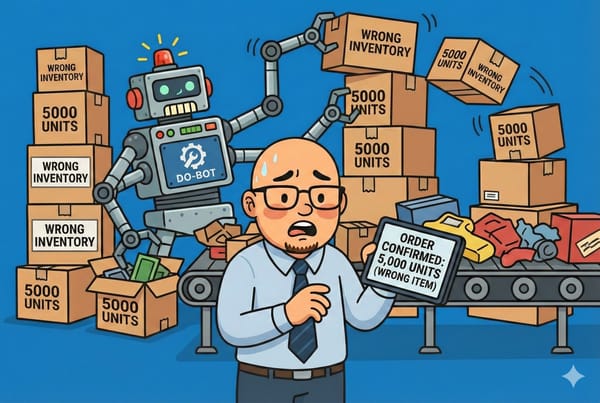
Inventory stopped syncing. Orders disappeared.
We were overselling some products and losing track of others entirely.
We had two systems running in parallel because no one trusted the ERP. That meant double data entry and zero confidence.
Our warehouse manager said, and I quote, “This system is fighting me like it wants to get fired.”
And so it was.
How We Recovered (Mostly)
We pulled the plug. We cut our losses.
We switched to a more robust ERP with and this time, did out due diligence.
We started over. Painfully.
It took weeks to fix the damage.
We had to manually reconcile stock counts, retrain staff, and rebuild workflows.
Our reporting was a mess. Our morale was worse.
And yet, we survived. Barely.
What We Learned (The Hard Way)
1. Fancy Does Not Equal Functional
We were dazzled by demos and buzzwords. We should have asked to see real use cases for companies our size.
2. Customization Means Complexity
If a system requires three consultants just to set up a basic workflow, you probably don’t need it. Or it doesn’t want to be used by humans.
3. ERP Regret Is Real
We should have started smaller or built toward integration gradually. You don’t need a jet engine when you still drive on back roads.
4. Ask These Questions Before You Buy:
- Can we test-drive this with real data first?
- What happens if onboarding takes longer than expected?
- How much support do we actually get, not just during setup, but ongoing?
- Can it handle messy, real-life edge cases?
If the answers are vague or the salesperson keeps talking about future releases, run.
Final Thought
ERP implementations are like major renovations. In theory, they improve everything. In practice, they take longer, cost more, and leave you wondering if it would have been easier to just knock the whole thing down and start over.
The Company that Shall Not Be Named is behind us now.
But the lessons? Those are forever. We are happy to say, we've found a rebound ERP and it has been glorious.