Stop Paying Retail: A Small Business Guide to Shipping Negotiation
If you are paying the "List Rate" for shipping, you are lighting money on fire. This guide covers everything from the math of Dimensional Weight to the specific scripts you need to use with your FedEx or UPS rep.

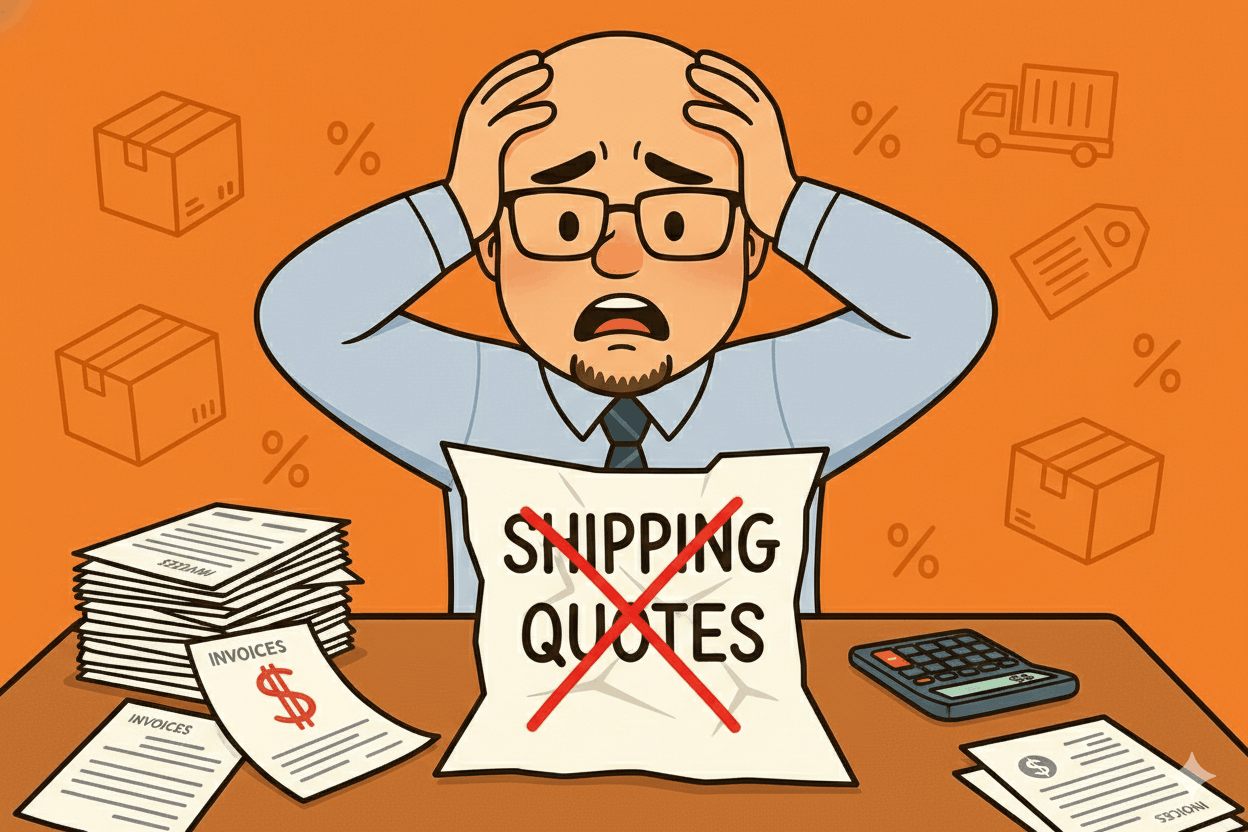
The Gist: Shipping is likely your second biggest expense after payroll or COGS. If you are paying "List Rates," you are overpaying by 15–30%. This guide is a comprehensive deep dive into the hidden math of logistics. We cover Dimensional Weight, Accessorials, GRIs, and Hardware so you can negotiate a contract that protects your margins.
If you walk into a carrier’s retail store, put a box on the counter, and pay the price they ask, you are being robbed.
Okay, "robbed" is a strong word. Let’s say you are making a generous, voluntary donation to their quarterly earnings report.
In the world of B2B distribution (like my day job at Scales Plus) and e-commerce, List Rates are a myth. They are the "MSRP" of the logistics world. It is a fake number that exists solely to make the discount look good.
But most small business owners don't know they can negotiate. They think, "I'm not Amazon. I only ship 50 boxes a week. FedEx won't talk to me."
Wrong.
If you are spending more than $10,000 a year on shipping, you have leverage. You just don't know how to use it yet.
This isn't a "tips and tricks" listicle. This is a masterclass. We are going to put on the Operations Hat and break down the entire game. We will cover the physics of "Dim Weight" and the specific contract clauses you need to strike out with a red pen.
Part 1: The Hidden Physics of Shipping (Dimensional Weight)
The first thing you need to understand is that carriers do not sell weight. They sell space.
A semi-truck or a Boeing 767 has a maximum weight limit, yes. But 90% of the time, that vehicle "cubes out" (runs out of physical space) long before it "weighs out."
Because of this, carriers charge you based on Dimensional Weight (Dim Weight). This is the single most misunderstood concept in shipping, and it is where 50% of your overspending comes from.
The Math: How Dim Weight is Calculated
Every shipment has two weights:
- Actual Weight: What the scale says.
- Dim Weight: A theoretical weight based on the box size.
The Carrier Rule: You pay whichever number is higher.
The formula for Dim Weight is:
(Length x Width x Height) / The Divisor = Dim Weight
The "Divisor" is the Key
The standard retail divisor is usually 139.
The higher the divisor, the lower the billable weight.
Let’s look at a real-world example.
You sell a specialized automotive part. It’s light (plastic) but bulky. You ship it in a 16" x 16" x 16" box.
- Actual Weight: 8 lbs.
At the Retail Divisor (139):
16 x 16 x 16 = 4,096 cubic inches4,096 / 139 = 29.46 lbs- Billable Weight: 30 lbs (Carriers always round up).
You are shipping an 8 lb box, but you are paying for a 30 lb box. You are paying to ship 22 lbs of air.
At a Negotiated Divisor (166):
If you negotiate your contract divisor up to 166 (a common target for small businesses):
4,096 / 166 = 24.67 lbs- Billable Weight: 25 lbs.
The Result: You just saved the cost of shipping 5 lbs. On a Zone 5 shipment, that might be $4.00 per box. If you ship 10 of those a week, you just saved $2,000 a year without changing anything about your operation.
The "Bulge" Factor (The Hidden Killer)
Here is a secret from the weighing industry. Cardboard isn't rigid.
If you pack a 12x12x12 box too full, the sides bulge out.
Laser dimensioners in carrier hubs scan the box at its widest point.
If your 12" box bulges to 12.5", the carrier rounds up to 13".
- 12x12x12 / 139 = 12 lbs
- 13x13x13 / 139 = 16 lbs
That tiny bulge just increased your shipping cost by 33%. Tape your boxes tight.
Part 2: The "Accessorial" Minefield
The Base Rate is rarely the problem. The Base Rate is usually reasonable.
The problem is the Accessorial Fees.
These are the surcharges added after the fact. In 2026, carriers have become addicted to these fees because they are harder to compare than base rates. If you are comparing FedEx vs. UPS based solely on the "Zone 5 Ground Rate," you are missing the forest for the trees.
Here is the "Dirty Dozen" list of fees you need to watch for.
1. Residential Delivery Fee
The Cost: ~$5.65 per package.
The Trap: It applies to any location the carrier deems "residential." This includes businesses run out of a home or farms.
The Fix: Ask for a 25–50% discount on this fee. It is one of the most commonly discounted line items.
2. Delivery Area Surcharge (DAS)
The Cost: $3.00 – $7.00 per package.
The Trap: This applies to specific zip codes that are "less dense" or rural.
The Fix: This is hard to waive completely. However, you can negotiate the zip code list or ask for a generic % discount on all DAS charges.
3. Additional Handling (AHS)
The Cost: $18.00 – $30.00+ per package.
The Trap: This triggers if:
- The longest side > 48 inches.
- The weight > 50 lbs.
- The packaging is not cardboard (e.g., a plastic bucket, a tire, a wooden crate).
The Fix: Audit your packaging. If your box is 49 inches long, cut it down to 47 inches. You just saved $20.00 instantly.
4. Large Package Surcharge
The Cost: $100.00+ per package.
The Trap: This is the "We hate this box" fee. It applies when Length + Girth > 130 inches.
The Fix: Do not ship these via Parcel (Ground). Move them to LTL (Freight). The math almost never works in your favor on Parcel for these sizes.
5. Address Correction Fee
The Cost: $19.50 per package.
The Trap: If your customer writes "St" instead of "Street" and the driver fixes it? Charged. If they miss a suite number? Charged.
The Fix: Use address validation software (like SmartyStreets or the validator inside ShipStation) before you print the label. This fee is a tax on laziness.
6. Third-Party Billing Fee
The Cost: 4.5% – 6% of the total shipping charge.
The Trap: If you drop ship for a customer and bill their UPS account number, UPS charges you a fee just for the privilege of typing in the number.
The Fix: Negotiate this to 0%. It is a junk fee.
7. Saturday Delivery
The Cost: Variable.
The Trap: If you don't specifically uncheck this, or if you ship via a service that includes it, you pay extra.
The Fix: Ensure your checkout cart clearly charges the customer for Saturday delivery if they want it. Don't eat this cost.
8. Peak Season Surcharges
The Cost: Variable (and painful).
The Trap: From October to January, carriers slap extra fees on everything.
The Fix: Negotiate a "Peak Season Waiver" if your volume is consistent. If you are a seasonal business (selling Christmas trees), you have no leverage here. If you are a B2B industrial supplier (selling bolts), you can argue that your volume doesn't spike, so you shouldn't be penalized.
Part 3: The Negotiation Playbook (Scripts Included)
"Josh, I don't have a 'Rep'. I just have a login."
If you are spending real money, you have a rep. You just haven't met them yet. Call customer service and ask: "Who is the Account Executive assigned to my zip code?"
Once you get them on the phone, do not start by asking for a discount. Start by discussing partnership.
Step 1: Data Gathering
Before the call, pull your data. You need to know:
- Annual Spend: (e.g., $45,000)
- Zone Distribution: (e.g., "60% of my shipments go to Zone 2 and 3.")
- Average Weight: (e.g., "5 lbs")
- Service Mix: (e.g., "90% Ground, 10% Next Day Air")
Step 2: The Opening Move
The Script:
"I'm currently reviewing our logistics budget for 2026. Right now, we are splitting volume between [Carrier A] and [Carrier B] / [USPS]. I’d like to consolidate that volume with one partner to simplify our dock operations, but I need to see a proposal that makes financial sense for us to move everything over."
Why this works: Carriers hate "splitters." They want 100% of your business. The promise of "Consolidation" is the only leverage a small business has.
Step 3: The "Tiered" Ask
They will not give you a flat 50% off. They work in Portfolio Tiers.
You want a contract that says:
- Spend $0 - $10k: 10% off
- Spend $10k - $25k: 15% off
- Spend $25k - $50k: 20% off
The Script:
"I see we are currently at Tier 1. Based on our projected growth, we expect to hit $50k in spend next year. I’d like to set up a tier structure that rewards that growth automatically, rather than having to renegotiate every six months."
Step 4: The Specific Rebuttals
Rep says: "We can't touch the Residential Fee. That's a hard cost for us."
You say: "I understand it's a cost, but at $5.65, it's eating 20% of my margin on small orders. If we can't lower the fee, can we increase the discount on the base Ground rate for weights 1-5 lbs to offset it?"
Rep says: "Your volume isn't high enough for a 166 divisor."
You say: "My average box density is actually quite high. We pack efficiently. If you can't do 166 on everything, can we apply it specifically to Zone 4-8 shipments where the air cost hurts the most?"
Step 5: The "Money Back Guarantee" (MBG) Trap
Crucial Warning: In many new contracts, carriers slip in a clause that says: "Customer waives the right to claim refunds for late service."
DO NOT SIGN THIS.
If you pay for Next Day Air and it arrives in two days, you are owed a refund. If you sign that waiver, you donated that money.
The Script: "I noticed the Service Guarantee Waiver is included. We rely on your reliability promises to sell to our customers. I need that waiver removed before I can sign."
Part 4: Carrier Strategy (The "Hybrid" Model)
Even with a great contract, FedEx/UPS might not be the right choice for everything.
1. The "Under 1 lb" Rule
If your package weighs less than 16 oz, USPS Ground Advantage (formerly First Class) is almost always unbeatable.
- FedEx Ground Min Charge: ~$10.00+ (after fees).
- USPS Ground Advantage: ~$4.00 - $6.00.
Do not put a 6 oz part in a FedEx box unless the customer paid for speed.
2. The Regional Carriers
If you ship heavily to one region (e.g., the West Coast), look at Regional Carriers like OnTrac (West) or LaserShip (East).
- They are often faster (Ground is overnight in a wider area).
- They are often cheaper.
- The Downside: Their tracking and service reliability can be variable.
3. Rate Shopping Software
Do not manually choose a carrier for every order. Use software like ShipStation, Shippo, or EasyPost.
You set rules:
- "If weight < 1 lb, use USPS."
- "If Zone < 4, use UPS Ground."
- "If Zone > 4, check rates."
This automates the savings.
Part 5: The Hardware & Ops (The "Scales Plus" Angle)
You can't manage what you don't measure. As a partner at Scales Plus, I see warehouses bleeding money simply because they have bad equipment.
1. The Scale
Stop using a bathroom scale. Stop using a cheap Amazon kitchen scale.
You need a Legal for Trade shipping scale (NTEP Approved).
- Why? If your scale says 49.8 lbs and the carrier's scale says 50.1 lbs, you just got hit with an Additional Handling Surcharge ($25+).
- If you are weighing pallets, use a floor scale. If you are weighing parcels, use a bench scale (Mettler Toledo or Rice Lake are the gold standards).
2. The Dimensioner
If you ship more than 50 boxes a day, buy a dimensioning system (like a Cubiscan or a Rice Lake iDimension).
- What it does: It scans the box instantly and records the L x W x H.
- Why you need it: It proves the carrier wrong. When FedEx audits you and says "That box was 14 inches," you can pull the log and say, "No, at 2:03 PM we scanned it at 12.5 inches."
- ROI: These machines cost money ($3k - $20k), but they pay for themselves by fighting audit fees.
3. The Thermal Printer
Inkjet printers are for homework. Laser printers are for invoices.
Labels belong on Thermal Transfer printers.
- Zebra ZP450 / GK420d: The industry workhorses.
- Rollo: The budget friendly option for smaller volumes.
- Why: No ink cost. Peel-and-stick speed. Scannable barcodes (inkjet barcodes smudge and cause "Address Correction" fees).
Part 6: The "Audit" Ritual (Your Weekly Homework)
Negotiating the rates is only Step 1. Enforcing them is Step 2.
Carriers make mistakes. A lot of them.
Every week, you (or your finance person) should pull the carrier invoice csv and check:
- The "Ghost" Dimensions: Did a 12x12x12 box suddenly get billed as 18x12x12? Dispute it.
- The Late Packages: Filter by "Service Type: Next Day Air." Check the delivery timestamps. If it was 1 minute late, file a claim. (Unless you signed that waiver!).
- The Residential Fees: Sort by "Commercial Adjustments." Did they charge a Residential fee to a factory? Dispute it. Google Maps Street View is your friend here.
Automation Tip:
If this sounds like too much work, this is where you hire a Parcel Audit Service (like L7, Refund Retriever, or VeriShip). They connect to your account, run these checks automatically, file the claims, and split the refund 50/50 with you. For small teams, this is usually worth it.
Part 7: The "GRI" (The Silent Inflation)
Finally, remember that your contract is a living document.
Every January, carriers announce a General Rate Increase (GRI).
They will say: "Rates are increasing by an average of 5.9%."
This is a lie.
5.9% is the average.
- Zone 1 might increase 4%.
- Zone 8 might increase 9%.
- Heavy boxes might increase 12%.
- Accessorial fees might increase 15%.
The Strategy:
Every November, when the GRI is announced, download the new charts. Calculate the impact on your specific package mix.
If your costs are going up 12% despite the "5.9%" announcement, call your rep immediately.
"This GRI disproportionately affects my business profile. We need to adjust my tier discount to keep my pricing neutral, or I have to look at the competition."
Conclusion: It's Just Math
Shipping feels emotional because it's the last thing that happens before the customer gets their product. It feels risky to mess with it.
But at the end of the day, logistics is just math.
- Volume / Density = Cost.
- Contract / Negotiation = Savings.
You don't need to be a Fortune 500 company to get a good deal. You just need to be organized, armed with data, and annoying enough to ask for what you deserve.
Action Items for This Week:
- Find your contract: Do you even know what your current divisor is?
- Check your invoice: How much did you pay in "Accessorials" last month?
- Measure your boxes: Are you shipping air?
- Send the email: "Who is my rep?"
Stop paying retail. Your margins will thank you.
Check out more practical advice in our Operations Hat Archive, including: