Do I Need an LLC to Start a Business? What It Actually Protects You From
Wondering if you need an LLC to get your business off the ground? Here’s what it really does, what it costs, and what it definitely does not do.

Published under The Legal Hat on HatStacked.com
You’ve got a business name, a half-built website, and a cousin who says you need to “form an LLC like yesterday.” Is that true? Or are you about to spend $125 to feel slightly more official?
Before we dive in, an important heads-up:
I’m not a lawyer. This is not legal advice.
It’s the plain-English version of what most business owners wish someone had explained before they filed an LLC and immediately forgot what it does.
If you’re making big decisions, call a lawyer. If you're trying to understand this stuff without crying, keep reading.
What Is an LLC? (And Why Are People Obsessed With It?)
An LLC (Limited Liability Company) is basically legal duct tape.
It sticks your business together, keeps your personal stuff safer, and makes you look slightly more grown-up to banks and vendors.
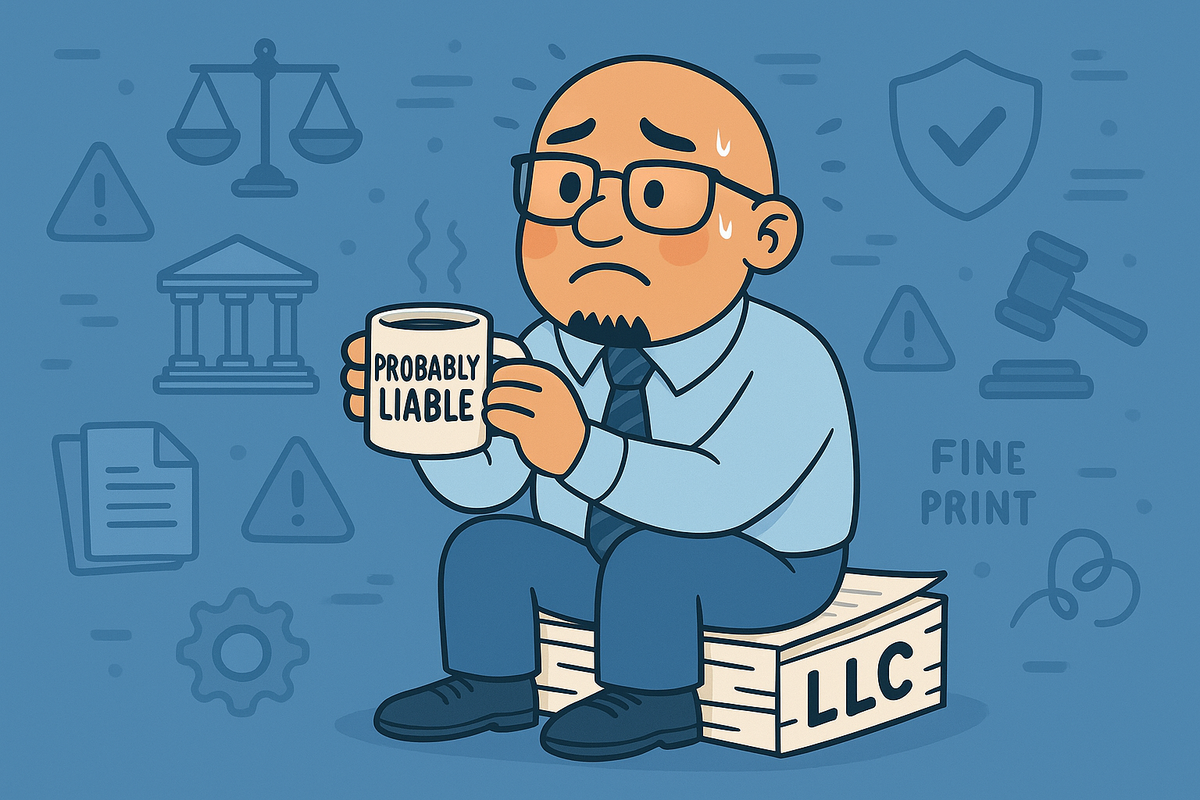
Technically, it creates a legal wall between you and your business. So if your business gets sued or can’t pay its debts, you might not lose your house.
We say “might” because that wall turns into a door if you ignore your bookkeeping, mix business with personal finances, or do something wildly irresponsible (like trademarking Disney’s logo).
Do I Have to Form One?
Nope. Most states let you operate as a sole proprietor without doing anything more official than picking a business name and yelling it into the void.
But here’s the trade-off:
- You and your business are legally the same
- You are personally responsible for everything
- There’s no liability protection, no legal separation, no cool acronym on your invoices
You can absolutely run your business this way.
You just need to be okay with the fact that if anything goes wrong, it’s coming out of your wallet.
What an LLC Actually Does For You
1. Personal Liability Protection
If someone gets hurt using your product, sues you for damages, or slips in your store because you forgot to fix the “temporary” rug duct-tape job from 2022, an LLC helps keep your personal assets safe.
Your business might be in trouble. But your house, savings, and vintage video game collection could be safe.
2. Makes You Look Legit
Clients trust businesses that seem real. And nothing says “real” like tacking three capital letters on the end of your name.
Is this shallow? Yes.
Is it effective? Also yes.
What an LLC Doesn’t Do
It will not:
- Stop the IRS from finding you
- Prevent lawsuits if you’re negligent
- Replace business insurance
- Automatically change your taxes
- Clean your desk
An LLC is not a magic shield. It’s just the first layer of grown-up business protection.
You still need to run things like a professional.
That includes separating your bank accounts, not Venmo-ing vendors, and possibly hiring someone who knows what a balance sheet is.
Related: Do I Need a CPA for My Small Business, or Can I Keep Guessing?
How Much Does It Cost?
That depends on your state, your timing, and your ability to resist overpriced legal filing services.
Expect:
- Filing fees: $40 to $500 depending on your state
- Annual fees: Some states charge $0, others charge $300
- Registered agent: Optional unless you enjoy being served legal documents during lunch
- LegalZoom-style fees: Optional unless you enjoy add-ons like “business seal kits”
Bottom line: forming an LLC is not expensive compared to the risk of not having one. But it’s not free, either.
What About Taxes?
An LLC is a legal structure, not a tax identity. That means:
- A single-member LLC is taxed like a sole proprietor
- A multi-member LLC is taxed like a partnership
- You can elect S-corp status if you want to confuse yourself and possibly save money
The IRS does not care that you have an LLC.
They care that you filed your Schedule C correctly and paid estimated taxes on time.
So the real question is: do you want a CPA, or do you want to wing it with Google and anxiety?
When You Might Not Need an LLC (Yet)
Sometimes it’s okay to wait, like when:
- You’re just freelancing to test the waters
- You don’t have clients yet
- You’re not collecting payments
- You’re only doing business with your grandma
You don’t need to rush. But once money changes hands and risk enters the picture, the “maybe later” answer becomes “you should probably do this now.”
When You Should Absolutely Form One
- You’re taking payments from strangers
- You’re hiring someone
- You signed a lease
- You’re working with heavy equipment, hot stoves, or humans with lawyers
- You want to sleep better at night
This also applies if you just want to stop wondering about it every 12 days.
Bottom Line
No, you don’t need an LLC to start your business.
But if you’re serious about keeping your business and personal life separate, it’s one of the smartest, least painful steps you can take.
Think of it like business deodorant.
No one notices when you have it.
Everyone notices when you don’t.
Talk to a real lawyer. Then come back here for more sarcastic but helpful explanations.