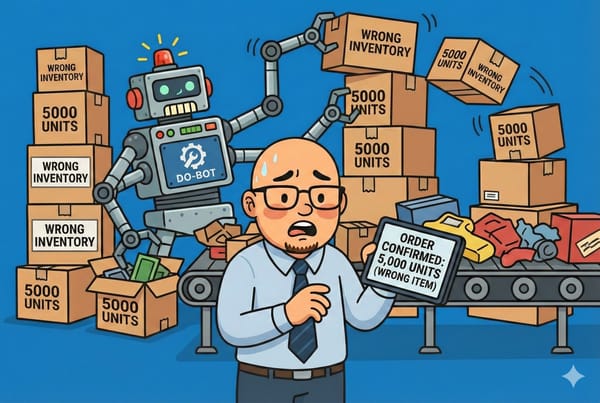
Click Now, Regret Later: The Startup Mistake of Adopting Tools Too Fast
Startups love new software, but adopting tools too fast leads to confusion and waste. Here’s how to onboard smarter and keep your stack under control.


Published under The Tool Hat on HatStacked.com
Every new founder believes the next app will fix everything. What it usually fixes is your schedule, because now you are spending it all in onboarding meetings.
The Startup Tool Obsession
There is something magnetic about shiny new software. The promise of productivity and automation feels like a shortcut to success. Before long, you are logged into three project managers, five chat apps, and two CRMs that cannot agree on anything.
You tell yourself that this new tool will change everything. It rarely does. What it will change is your budget, your passwords, and your team’s patience.
Founders love tools because they create the feeling of progress. But collecting apps is not the same as building a system. Too many early-stage businesses end up paying for confusion because they adopt tools too fast and without structure.
Here are the most common software onboarding mistakes that quietly slow down new startups.
1. Buying the Dream Instead of Solving the Problem
If your reason for signing up is “I saw it on LinkedIn,” you are already in trouble.
The best tools solve clear problems. The worst ones promise to solve everything. Founders get dazzled by automation demos and “AI insights” without ever defining what issue they want to fix.
Before you buy anything, write down the single pain point it must address. If you need a paragraph to explain it, the problem is not clear enough yet.
2. Believing the “Instant Fix” Fantasy
Startups love instant gratification. A new app feels like an easy win. You install it, click through setup, and feel productive. Two weeks later, it sits untouched while you return to spreadsheets.
New software costs time before it saves time. It takes setup, testing, and training before it becomes efficient. If you are too busy to learn it properly, you are too busy to add it.
3. Skipping the Pilot Phase
Rolling out software without a trial is like hiring an employee without an interview.
A short pilot period helps you find out whether it integrates well, if your team likes it, and if support responds quickly. Run a test with one department or a small team. If it fails there, it is not ready for the whole company.
Testing early prevents an expensive rollback later.
4. Letting Everyone Set It Up
Giving everyone admin rights sounds flexible. It is not.
When multiple people configure the same app, the result is a confusing mix of settings and permissions. One person should own the setup, documentation, and training. That single owner provides accountability and structure.
No owner means no adoption.
5. Ignoring Integration Costs
Every SaaS platform boasts about “working with 2,000 apps.” What that usually means is “you will need Zapier to make them talk.”
Each integration adds another point of failure. Every update risks breaking something else. Founders forget that every new app also adds another maintenance layer.
If you spend more time connecting tools than using them, the stack is too heavy.
Before adopting anything new, audit what you already use. Decide what is critical, what is redundant, and who maintains it. Fewer tools with deeper value always beat a wide stack you barely understand.
6. Onboarding Without a Plan
Adoption without documentation is just enthusiasm. Someone learns it, teaches nobody, and then leaves. Now the rest of the team is stuck guessing passwords.
Create a short onboarding checklist for every tool. Include:
- What problem it solves.
- Who owns the setup.
- Which data to migrate.
- Who will be trained and when.
- How success will be measured.
- When to review or cancel.
If you cannot answer those six points, you are not ready to add it.
7. Skipping Training
No one figures it out on their own. “It’s intuitive” is the lie every founder tells before spending a week in confusion.
Schedule one official walkthrough for every major platform. Record it, and make a one-page cheat sheet. Training is not a luxury; it is insurance against chaos.
If only one person knows how it works, that person owns your entire process.
8. Using Too Many Tools for the Same Job
If your team uses Slack and Teams, or Trello and ClickUp, you are not improving productivity. You are creating redundancy.
Each extra platform divides attention and multiplies confusion. When two tools overlap, pick one and delete the other. Every duplicate license is money that could have gone toward something that actually grows the business.

Related: When Your Systems Don’t Exist Yet: The Operational Mistakes New Founders Always Make
9. Ignoring Change Fatigue
Every time you switch software, you burn energy. Each “new and better” system chips away at trust. Employees eventually stop believing in your latest tool if the last four failed.
Adopt slowly. Keep software long enough for people to master it. Constant switching kills morale faster than bad UX ever could.
10. Falling for Feature Overload
More features do not mean better tools. They usually mean more menus to ignore.
The best platforms do one thing well. The rest hide complexity behind buzzwords. Ignore long feature lists and focus on usability, speed, support, and scalability.
If you are paying for tools that promise benefits “someday,” that day will never come.
11. Forgetting About Hidden Costs
The monthly fee is just the start. The real price includes migration, training, data cleanup, downtime, and employee frustration.
A $50 subscription can quietly become a $2,000 problem once you count lost time. Efficiency should not cost more than it saves.
12. Confusing Dashboards With Results
Dashboards look impressive. They are colorful and convincing. But unless you act on the numbers, you are only admiring your data.
Define clear goals before you add a tool. Charts should guide decisions, not decorate reports.
13. Ignoring Security and Permissions
In the rush to onboard, most founders give everyone admin access. Months later, no one remembers who controls what. Sometimes a contractor still has full CRM access.
Set clear permissions from the start. One admin, limited editors, and everyone else read-only. When someone leaves, remove them immediately. Security is not paranoia; it is maintenance.
14. Neglecting to Retire Old Tools
Startups are good at adding software but terrible at removing it. Old systems linger with half-migrated data.
Eventually, people use two versions of the same process. Archive or delete outdated apps completely. Half-switching is worse than staying put.
15. Forgetting Regular Stack Reviews
Your software stack fills up like a closet. Review it every quarter. Ask:
- Do we still use it?
- Does it add measurable value?
- Is it redundant?
- Can something simpler do the same thing?
Deleting one unused platform is sometimes more productive than adding two new ones.
16. Expecting Software to Replace Strategy
No app will make you profitable or solve your leadership gaps. Technology supports direction; it does not create it.
Fix the underlying process before adding automation. If you lack clarity, the tool will only multiply confusion.
The Takeaway
The best startups are not the ones with the most apps. They are the ones that master the few they use.
Adopt slowly, test deliberately, and document everything. A smaller, well-run stack always wins over a sprawling one full of half-learned logins.
The fastest way to streamline your business is not more software. It is discipline.