AI in Operations: Turning 8-Hour Processes Into 8-Minute Tasks
AI can cut your daily operations from eight hours to eight minutes. Here’s how to automate smartly without losing control.


Published under The Operations Hat on HatStacked.com
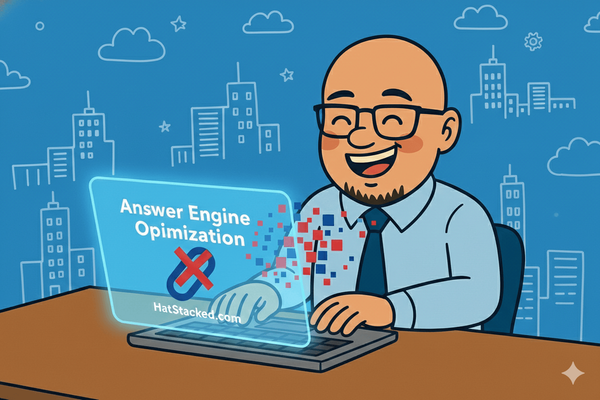
If your team still spends a whole day updating spreadsheets, it’s not dedication, it’s a cry for automation. Every hour lost to dragging formulas across cells or color-coding columns is an hour that could’ve gone toward growing your business, improving your product, or at least drinking coffee without staring at a grid of despair. Spreadsheets were great in 2005.
The old way: spreadsheets, sighs, and strong coffee
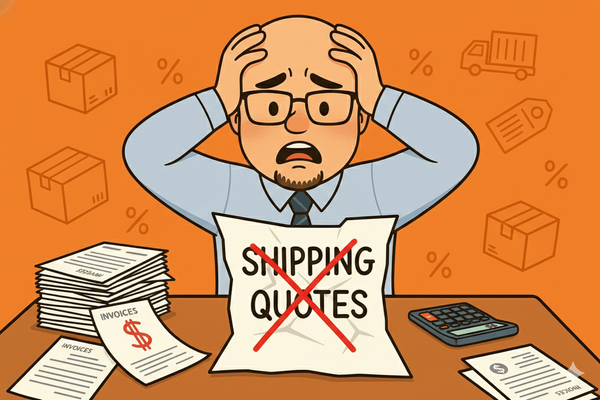
Operations has always been about efficiency, but for small businesses, “efficient” used to mean “it gets done eventually.” The daily grind of reports, inventory updates, and customer follow-ups could chew through eight hours before lunch.
Now AI is quietly taking those long, manual tasks and slicing them down to minutes. The kind of minutes that make you question what else you’ve been wasting your life doing.
What AI in operations actually means
AI in operations isn’t about replacing people with robots. It’s about giving your existing systems a brain.
Think of it like hiring an intern who doesn’t get tired, doesn’t forget steps, and never asks where the stapler is. It learns patterns, predicts outcomes, and automates repetitive work that clogs your day.
Examples:
- Auto-generating reports instead of exporting data manually.
- Flagging supply chain delays before they happen.
- Assigning tasks based on workload balance, not “who looks least busy.”
- Summarizing hundreds of emails into something you can read in one breath.
It’s the difference between you running the business and the business running itself.
The tools making it happen
You don’t need a $10,000 automation suite to make AI useful. Most of the good stuff is already hiding in apps you probably use:
- Zapier + ChatGPT: Automatically summarize customer tickets or emails before you even open them.
- Notion AI: Generate SOPs, meeting notes, and process checklists based on your templates.
- ClickUp or Monday.com AI: Predict project timelines and flag risks based on task history.
- ChatGPT custom GPTs: Build a private assistant that knows your procedures, tone, and quirks.
The best part? You can chain these tools together. One task triggers another, and suddenly your eight-hour administrative slog is an eight-minute automation chain.
The 8-hour process, step by step
Let’s look at a real example from a growing e-commerce business:
The old way
Every Monday, the operations manager spent the morning compiling inventory levels, open orders, supplier lead times, and shipping performance. Then they built a report, sent it to leadership, and hoped the numbers still made sense by Tuesday.
The new way
AI connects the data sources—Shopify, QuickBooks, ShipStation, and Google Sheets—and pulls everything into one dashboard. A single command in ChatGPT or Notion AI generates a weekly summary in human language:
“Inventory is down 12% on SKU A because of supplier delays. Average fulfillment time increased from 1.8 to 2.3 days. Recommend increasing reorder quantity by 25% next cycle.”
The report takes eight minutes to generate, not eight hours. The manager gets to actually manage instead of wrestle CSVs.
Where AI saves you the most time
AI shines in tasks that are predictable, repetitive, and data-heavy. That covers… almost everything in operations.
- Inventory forecasting: Tools like Katana MRP and NetSuite now use AI to predict demand based on order history and seasonality.
- Scheduling: AI can assign shifts or deliveries around constraints automatically.
- Customer communication: Automate status updates, refunds, or delay notifications through integrated chatbots.
- Document control: AI can tag, archive, and retrieve files instantly, even if you forgot what you named them.
- Error prevention: AI can flag anomalies in orders, shipping weights, or invoice amounts before humans even notice.
The goal is to remove the tedium that kills your staff's focus.
 Related: The Small Business Guide to AI in 2025
The new bottleneck: too much automation
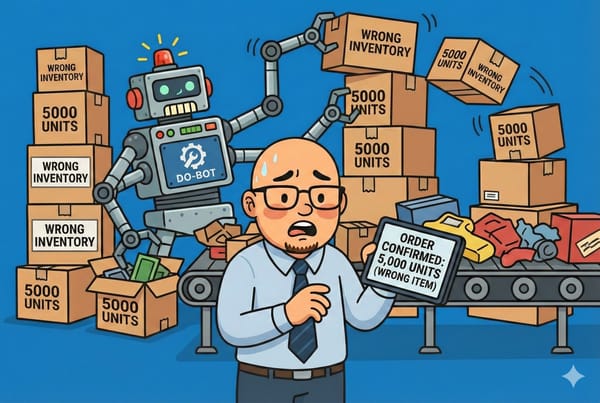
There’s such a thing as over-automating. If every task triggers another, you can end up with a digital Rube Goldberg machine.
We’ve seen businesses accidentally send three refund emails, update 50 database records, and notify Slack six times before anyone blinked.
AI doesn’t have judgment. It does exactly what you tell it—even if what you tell it makes no sense.
The fix? Keep a human “air traffic controller” who reviews automation logs and steps in when the data looks wrong. Automation should free your brain, not replace it.
Common AI pitfalls in operations
Even the best tools can backfire if you don’t plan ahead. Watch out for these traps:
- No central strategy. Random automations that don’t talk to each other cause chaos.
- Bad data. AI learns from your systems—garbage data still produces garbage results.
- Privacy oversights. Feeding customer data into AI without verifying compliance is a fast way to meet the FTC.
- Dependency. If your whole business halts because a plugin fails, you automated too much.
AI should streamline your operations, not become your entire operation.
Where to start if you’re new
- Identify your three biggest time drains—tasks you hate doing but have to do weekly.
- Find an AI-enabled tool that targets one of them.
- Automate 50% of the task, not 100%. Keep control while you learn the ropes.
- Track time saved, errors reduced, and sanity restored.
Within a month, you’ll have the proof (and motivation) to expand to the rest.
The 8-minute mindset
AI won’t magically make you efficient. But it will amplify whatever system you already have. If your operations are messy, it’ll multiply the mess. If they’re organized, it’ll turn them into a smooth, self-running machine.
The secret is having the discipline to keep humans in the loop, refine processes, and measure results.
Every eight-minute automation you build is one more step away from chaos and one closer to calm.
So ask yourself: what’s still taking you eight hours that doesn’t have to?